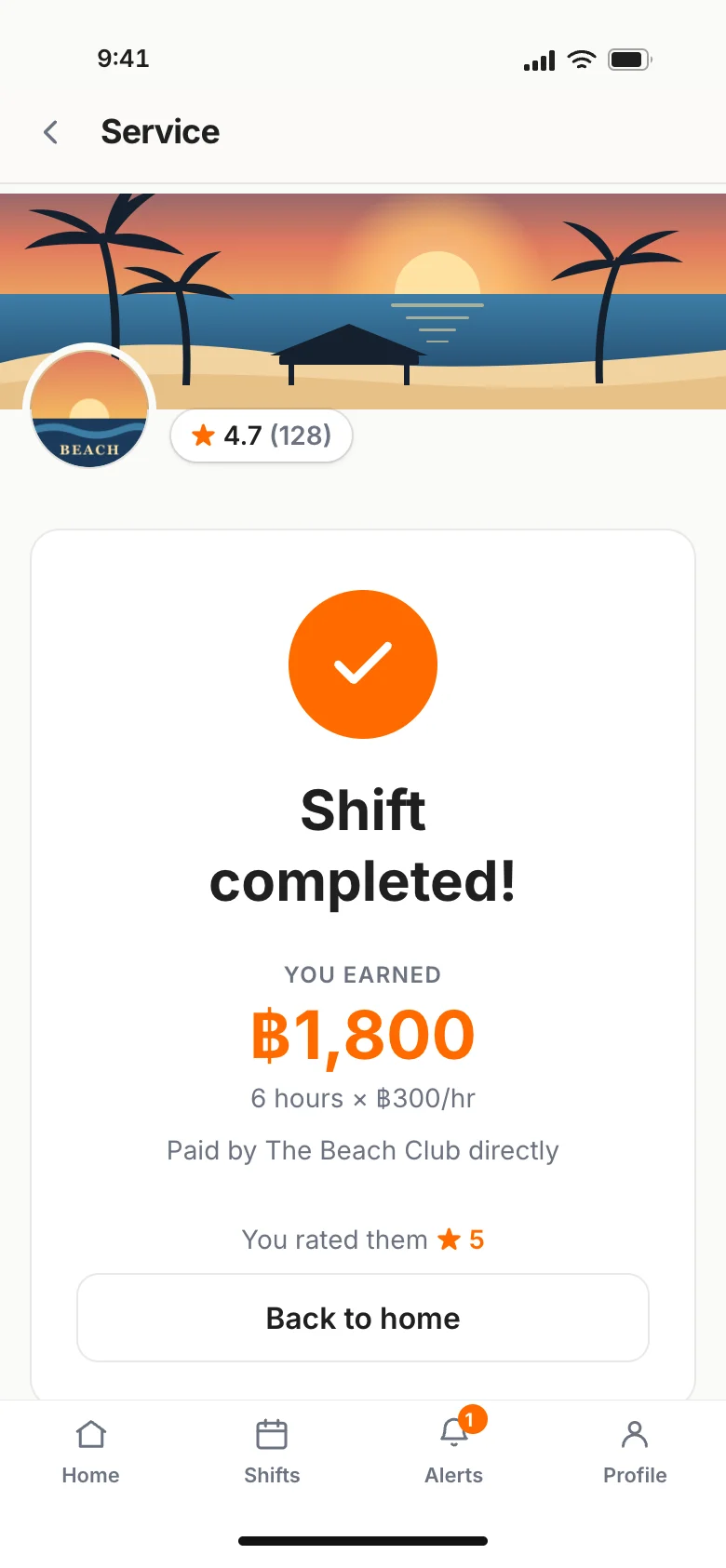
Post in under a minute
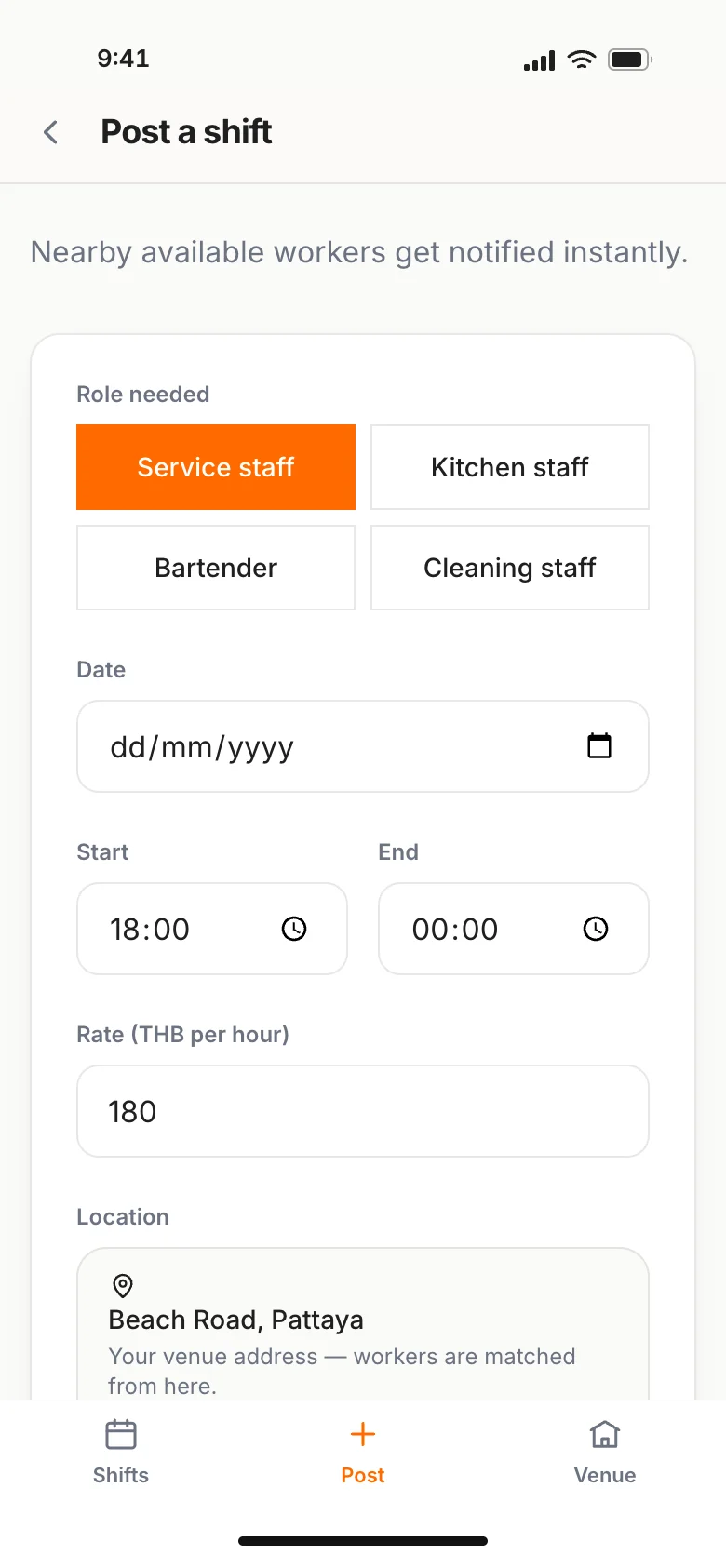
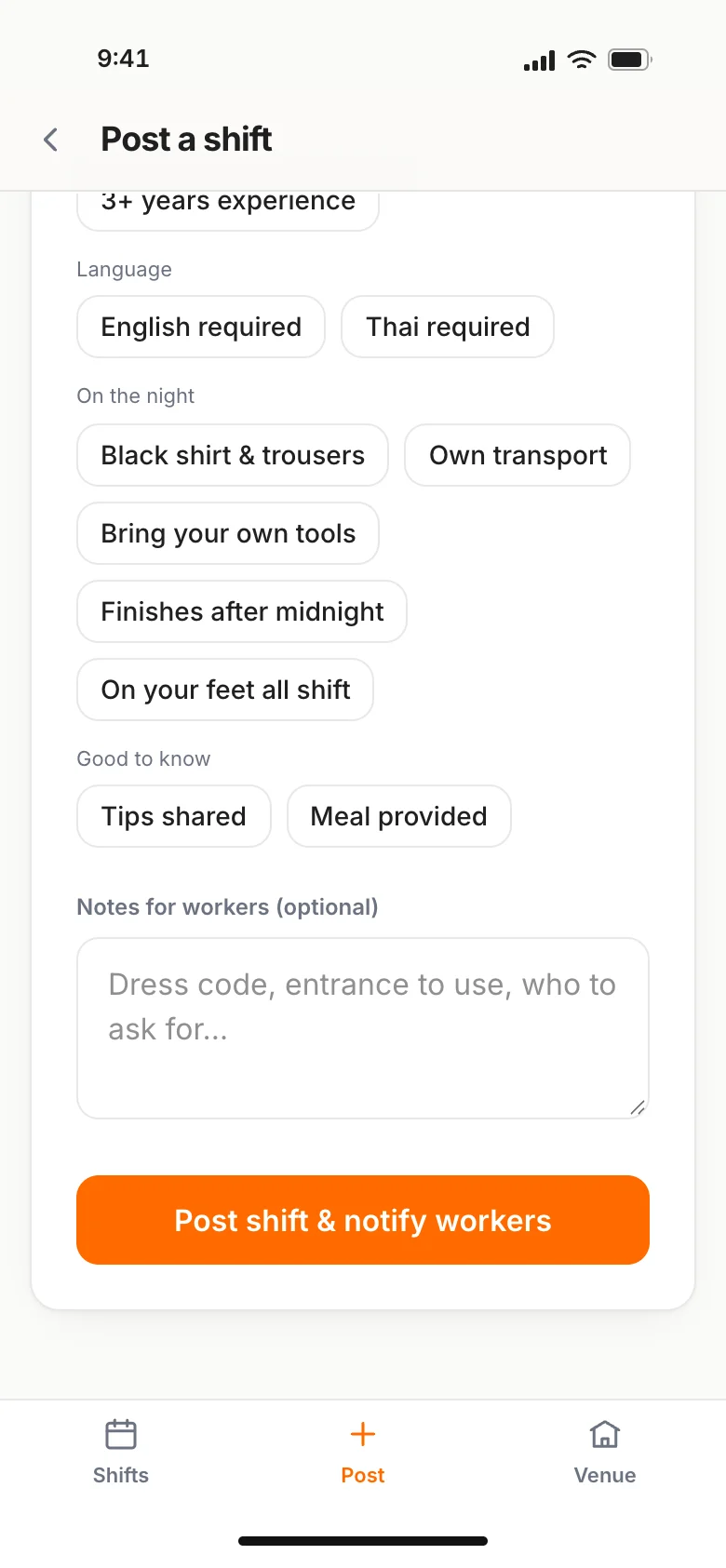
Role, time, place and rate. The venue's address is filled in for you.
Case study · Freelance, via SafeComs
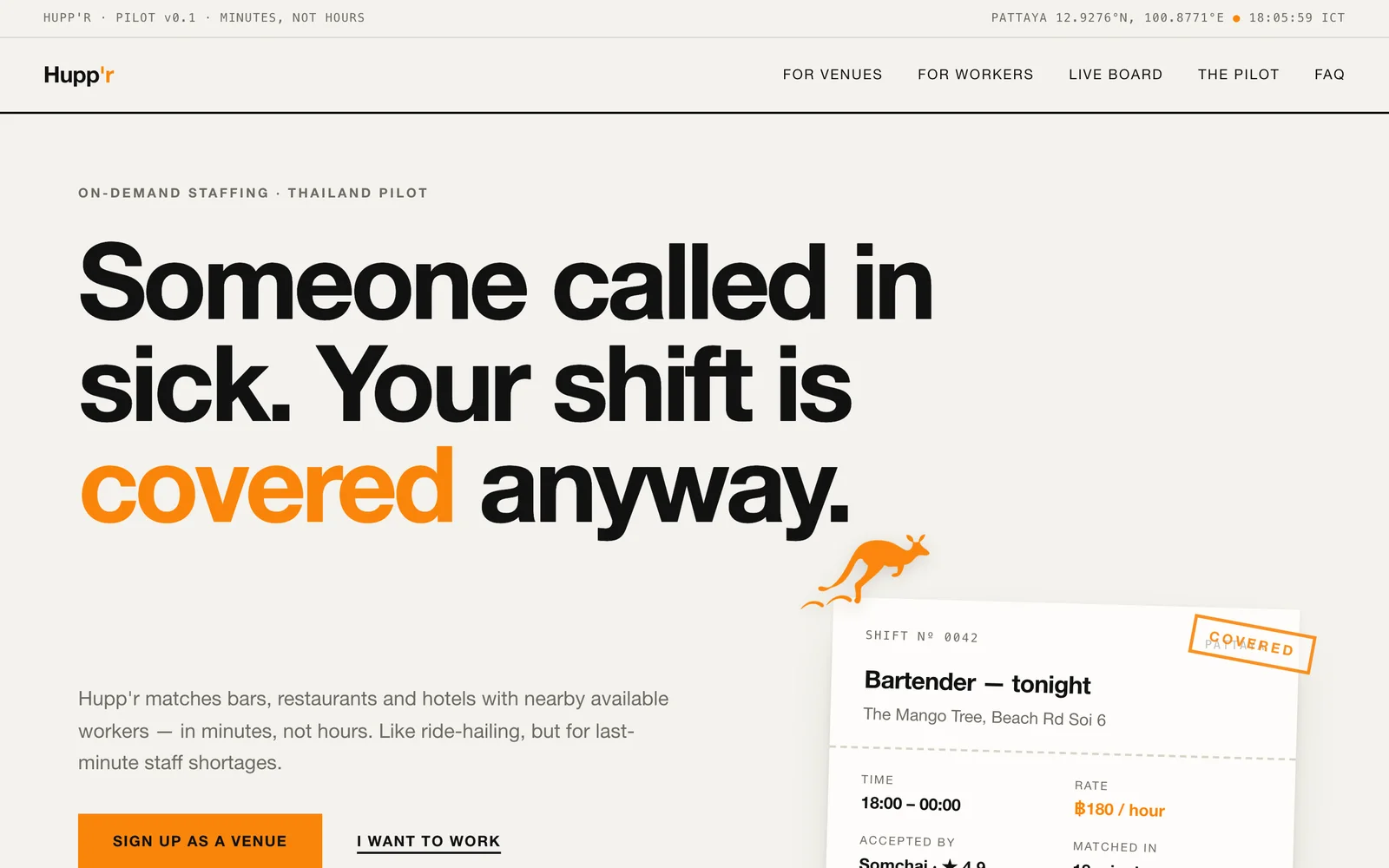
A staffing app for bars and restaurants in Thailand. When someone calls in sick, the venue posts the shift and nearby workers get a notification.
 Hupp'r Jobs
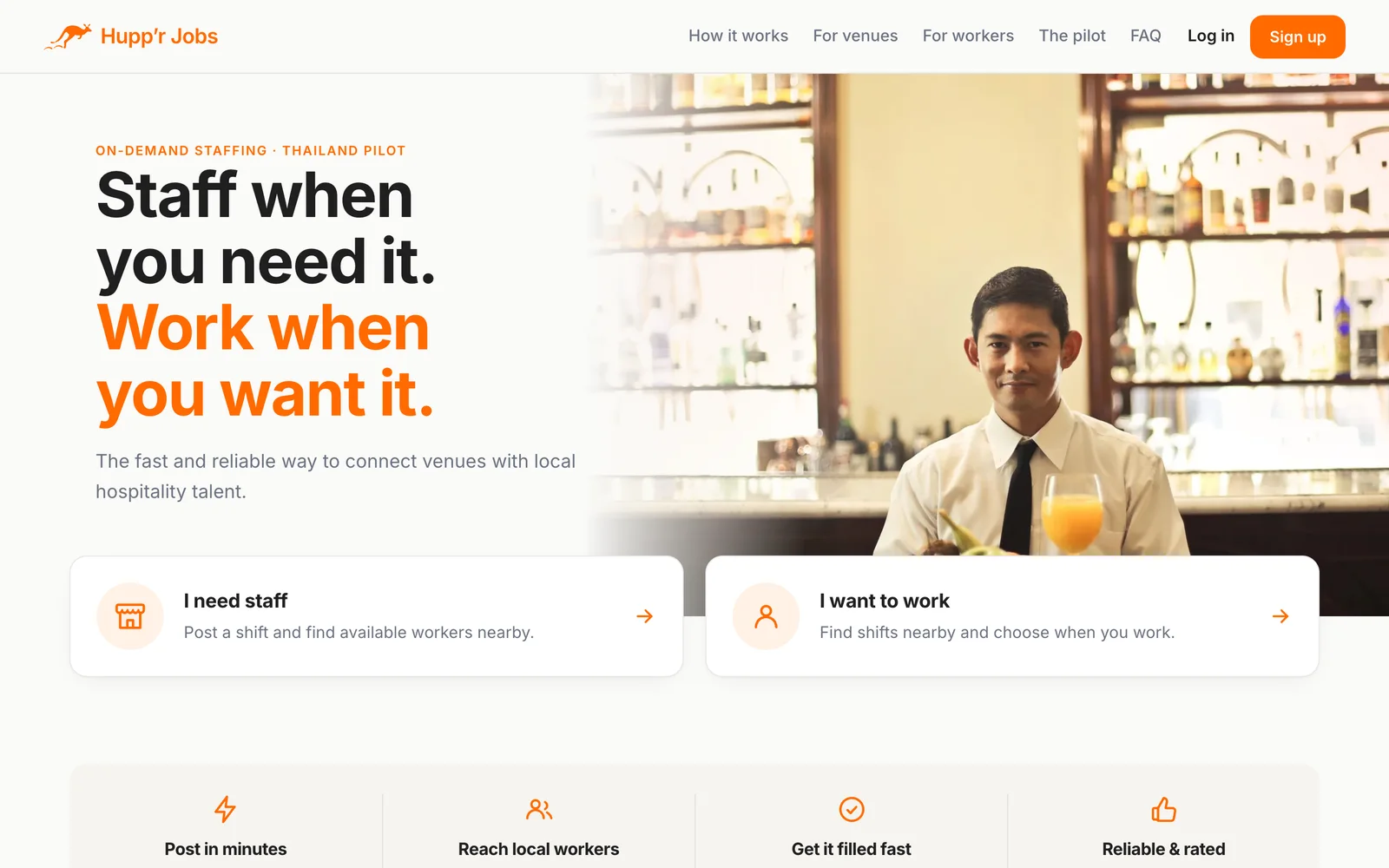
Staff when
you need it.
Work when
you want it.
Venue portal · Worker app · Thailand

Product designer · designed it and prototyped it in code
Aug – Sep 2026 · 8 weeks
3 brand directions · design system · 21 screens · client testing rounds
Next.js · Expo · Supabase · push notifications · Claude Code
Venue web portal · worker app · website
Founder of Hupp'r Jobs, via SafeComs
Role, time, place and rate. The venue's address is filled in for you.
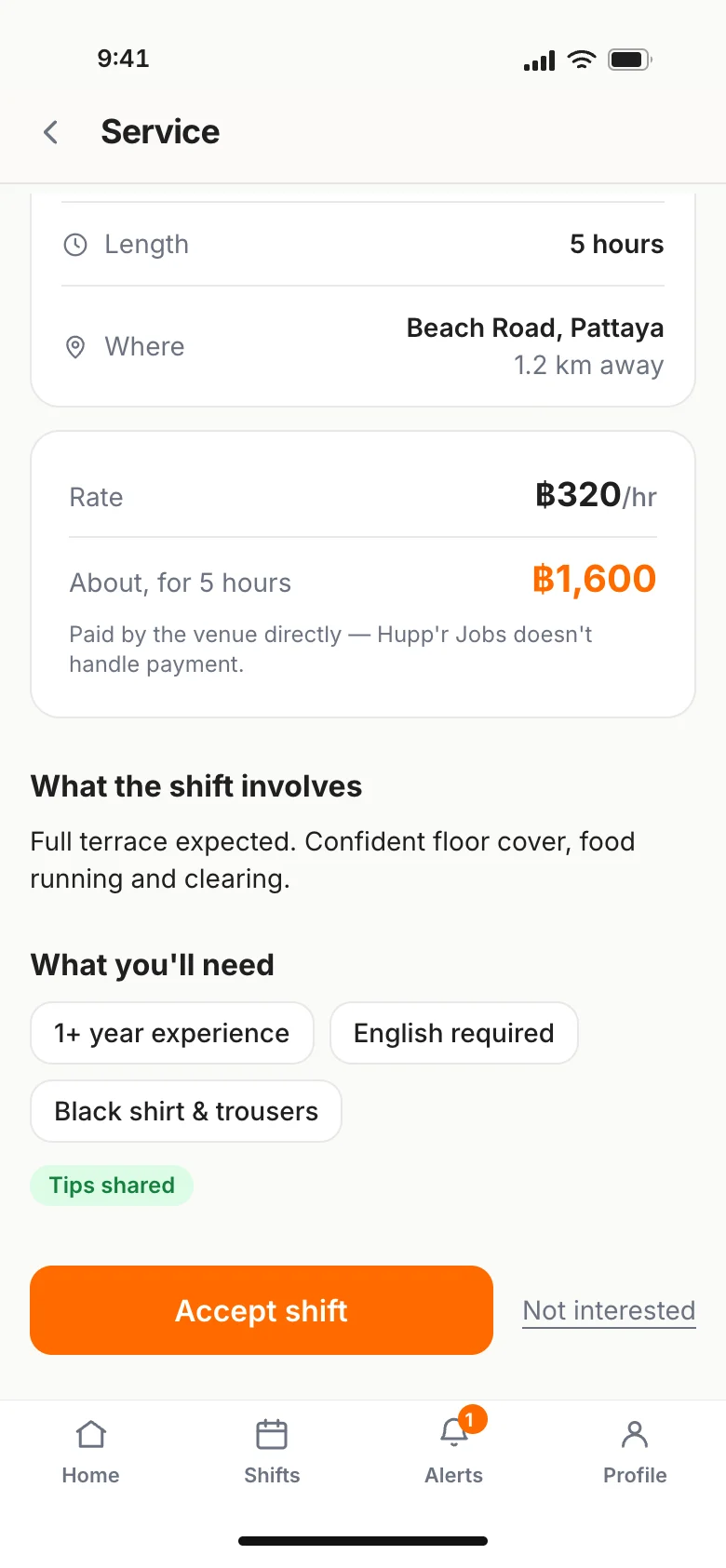
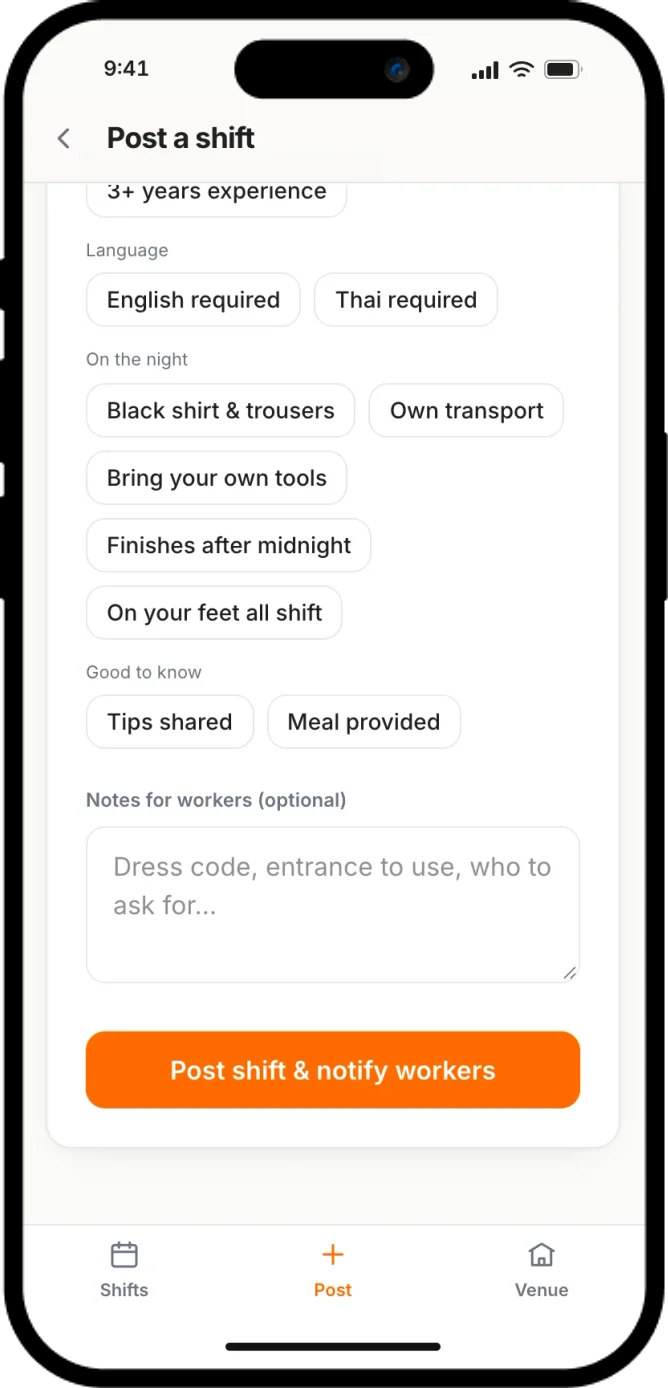
Nearby workers who do that job, and nobody else.
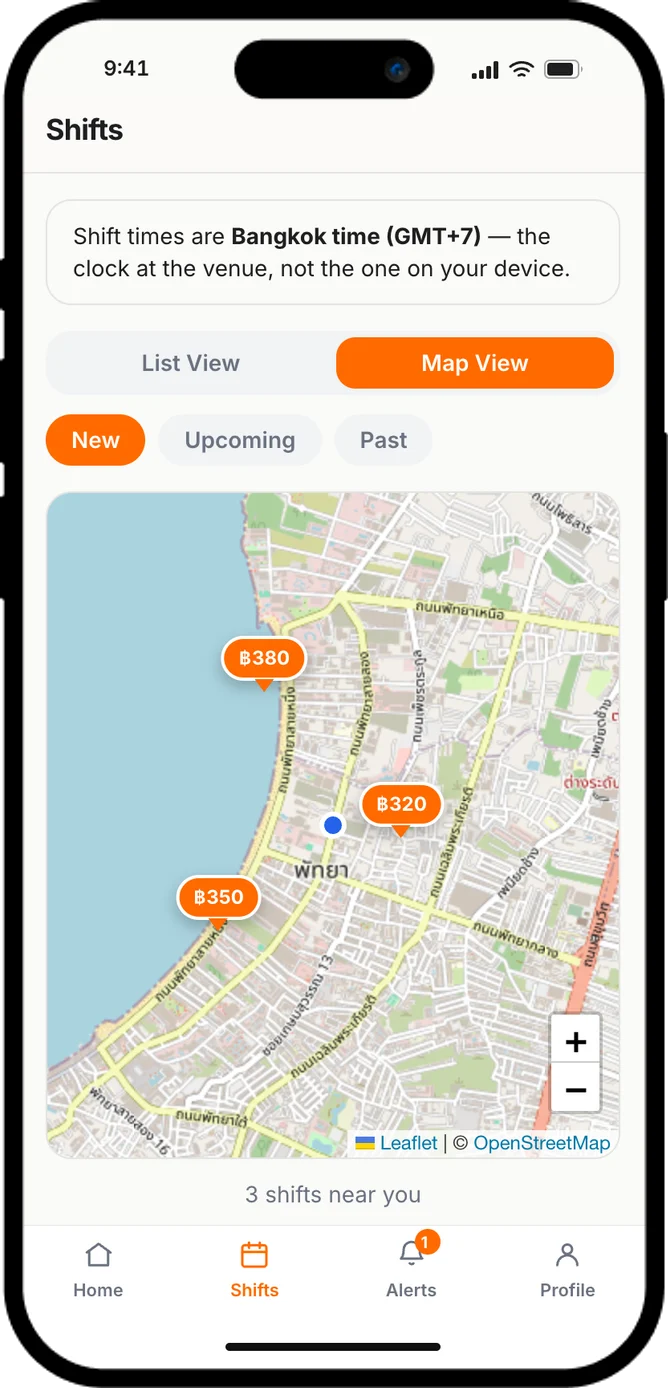
Every open shift nearby, with the pay right on the pin.
Small venues in Thailand fill last-minute shifts through WhatsApp, Facebook and LINE groups. It's slow, you can't reach only people nearby, and there are no reviews.
The founder gave me a written concept and a list of screens, no designs. He pictured a job board that workers browse. But a shift that starts tonight can't wait for someone to scroll past it, so I built it around matching instead: the venue posts once, and the right people nearby get a notification straight away.
My first direction, Paper & Ink, was distinctive, but it didn't look like any app a bar owner or a waiter already uses. For a product that asks people to trust a stranger with a shift, that's a problem. People trust what feels familiar: rounded cards, a bottom tab bar, clear orange buttons, the patterns they know from Grab or Uber Eats.
So when the founder leaned towards the bright, friendly direction and sent a brand board of his own, I moved the app and website over to it. After that it was about keeping every screen consistent: orange only for the brand and the main button, status as soft coloured pills, and Inter everywhere.
The founder tested everything from the Netherlands, and we went back and forth by email over a few rounds. Early on he reported that his shifts never reached any workers. Before changing anything I checked the data: matching worked fine, but his two test accounts were about 9,000 km apart. The real problem was that the app failed silently. So now, when a shift reaches nobody, the venue sees why and can post it again.
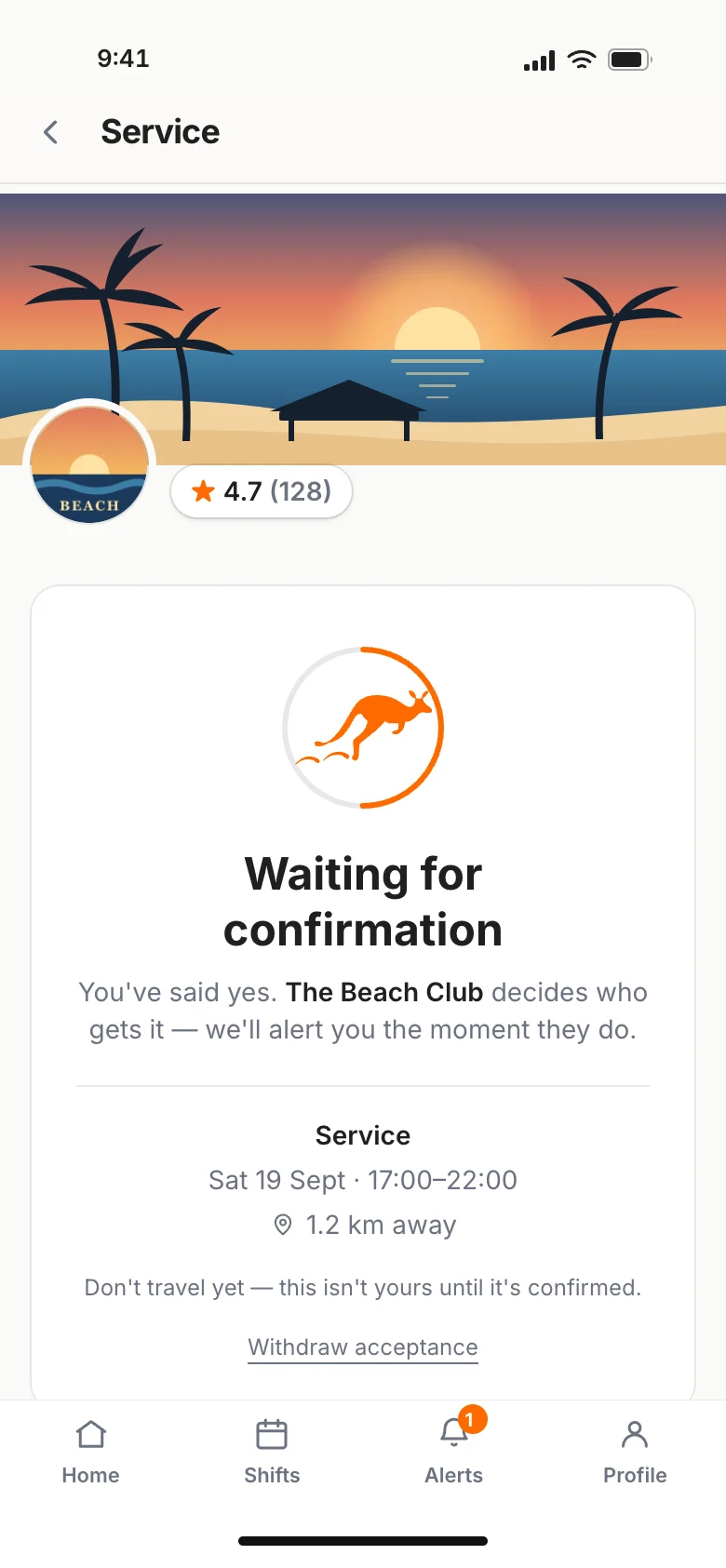
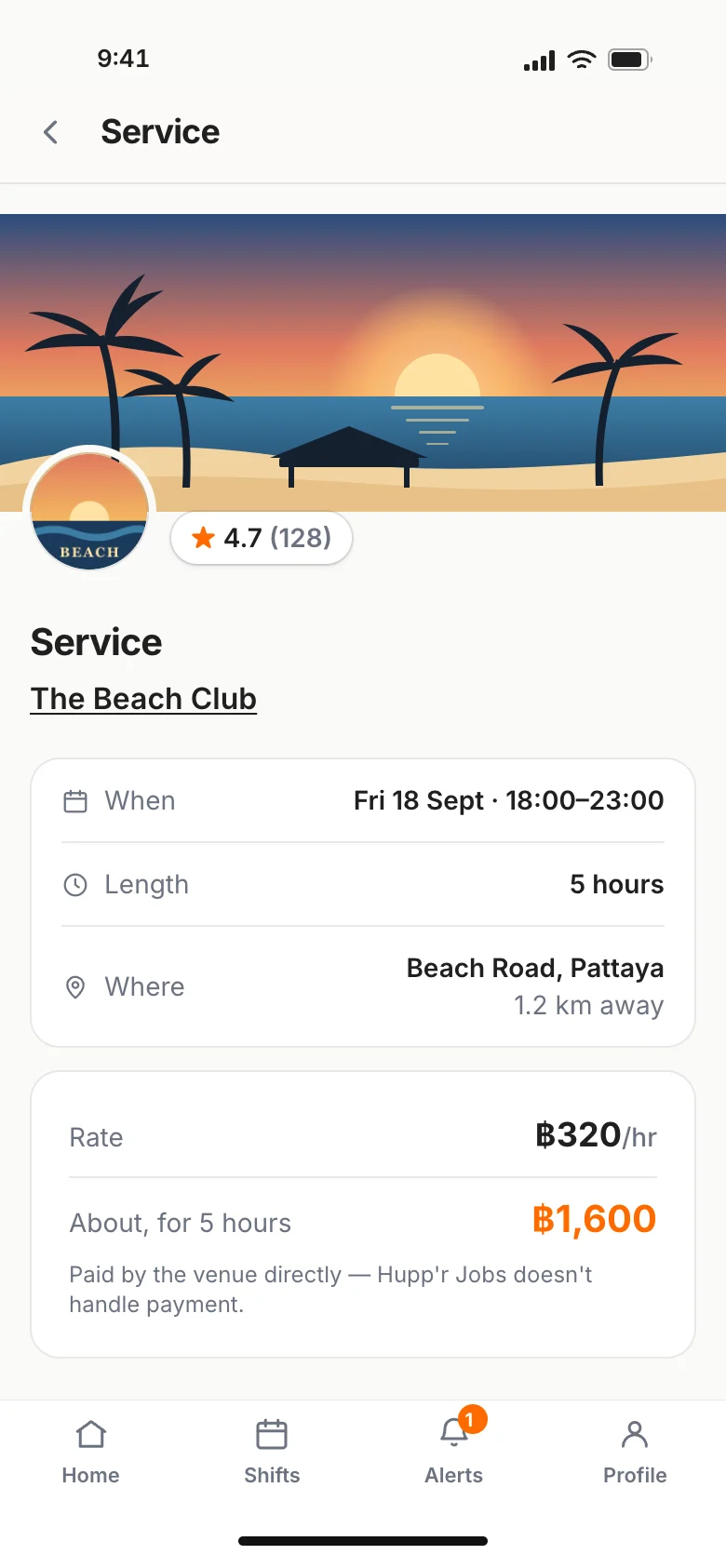
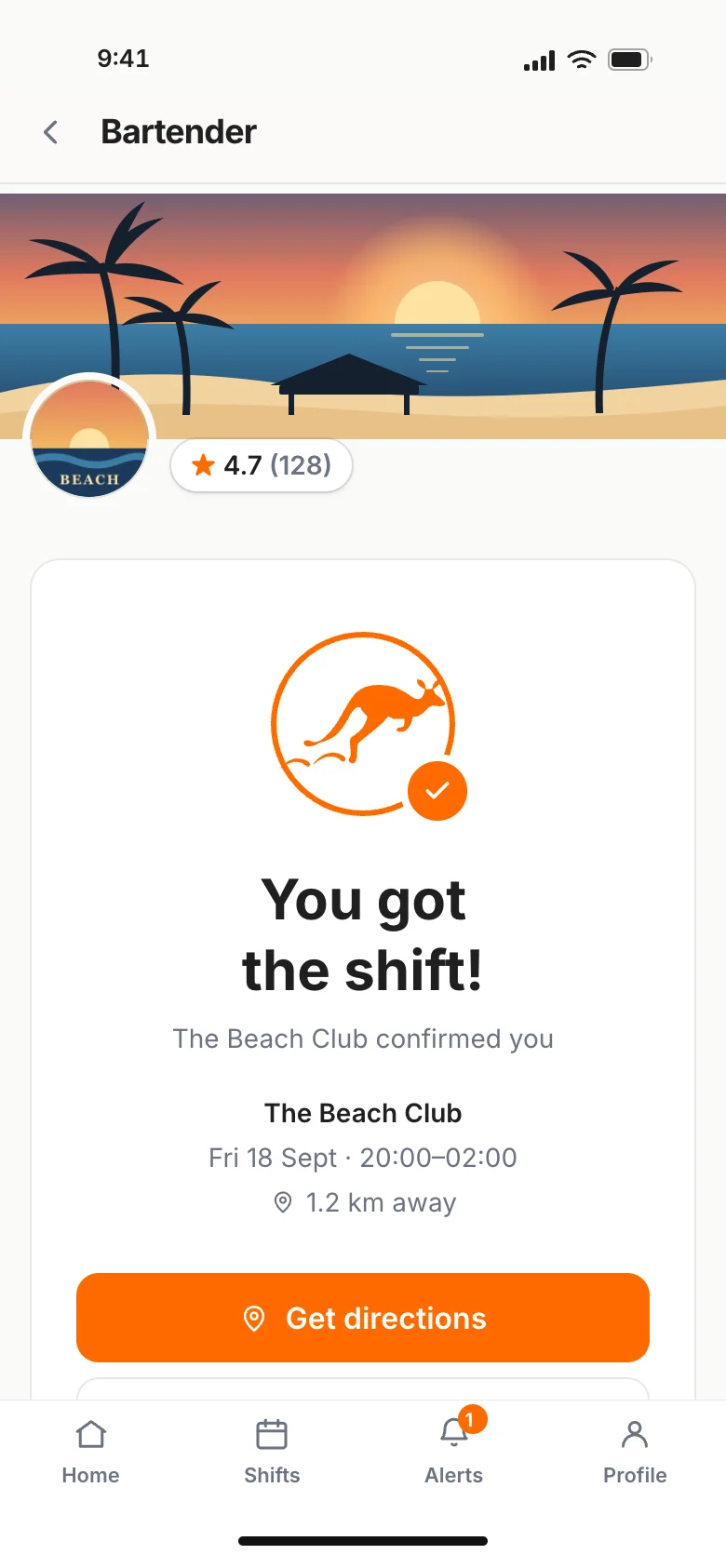
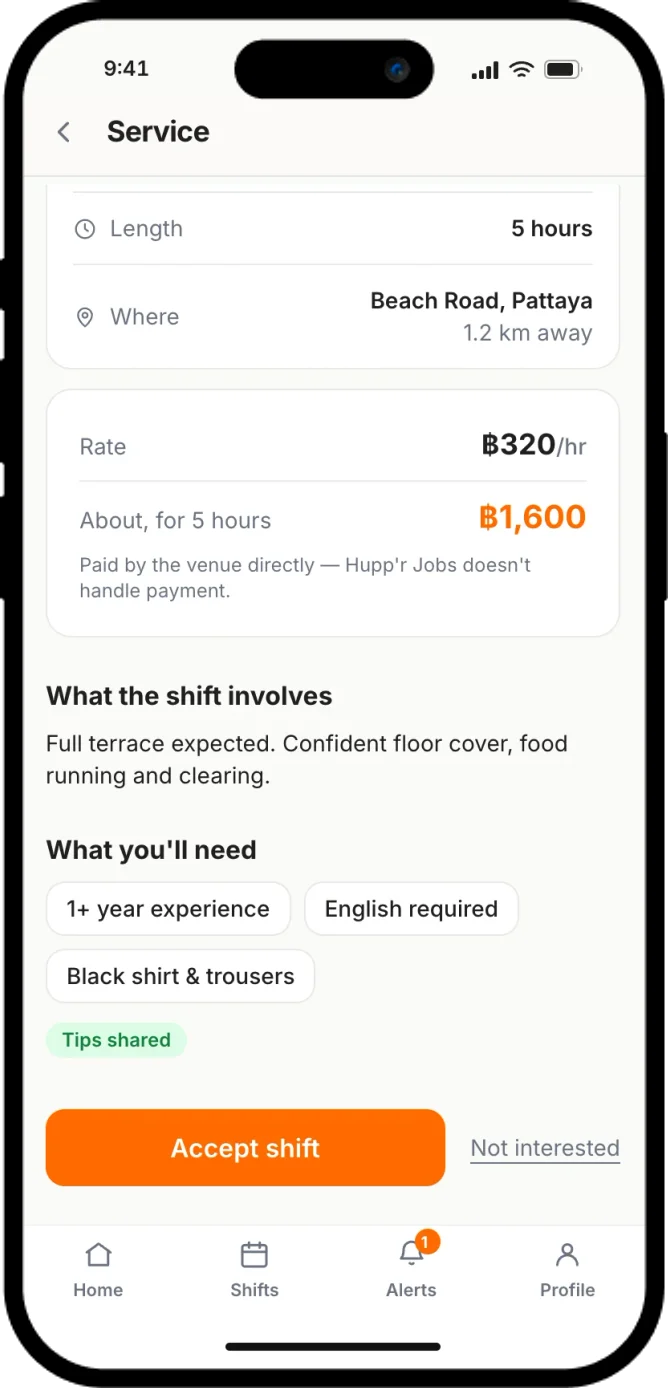
Most other changes were the same kind of thing: making sure the app always tells people what just happened. "You got the shift!" only appears once the venue has actually confirmed, and shift times always follow the venue's clock.
Testing on two separate phones was slow: post on one, pick up the other, check, repeat. So I built a page that runs both portals live, side by side. The founder could accept a shift as a worker and watch it land on the venue's board straight away.
 Hupp'r Jobs
Not a mockup: the live product in a phone-sized window. Accept a shift on the worker side and watch it land on the venue's.
Signed in as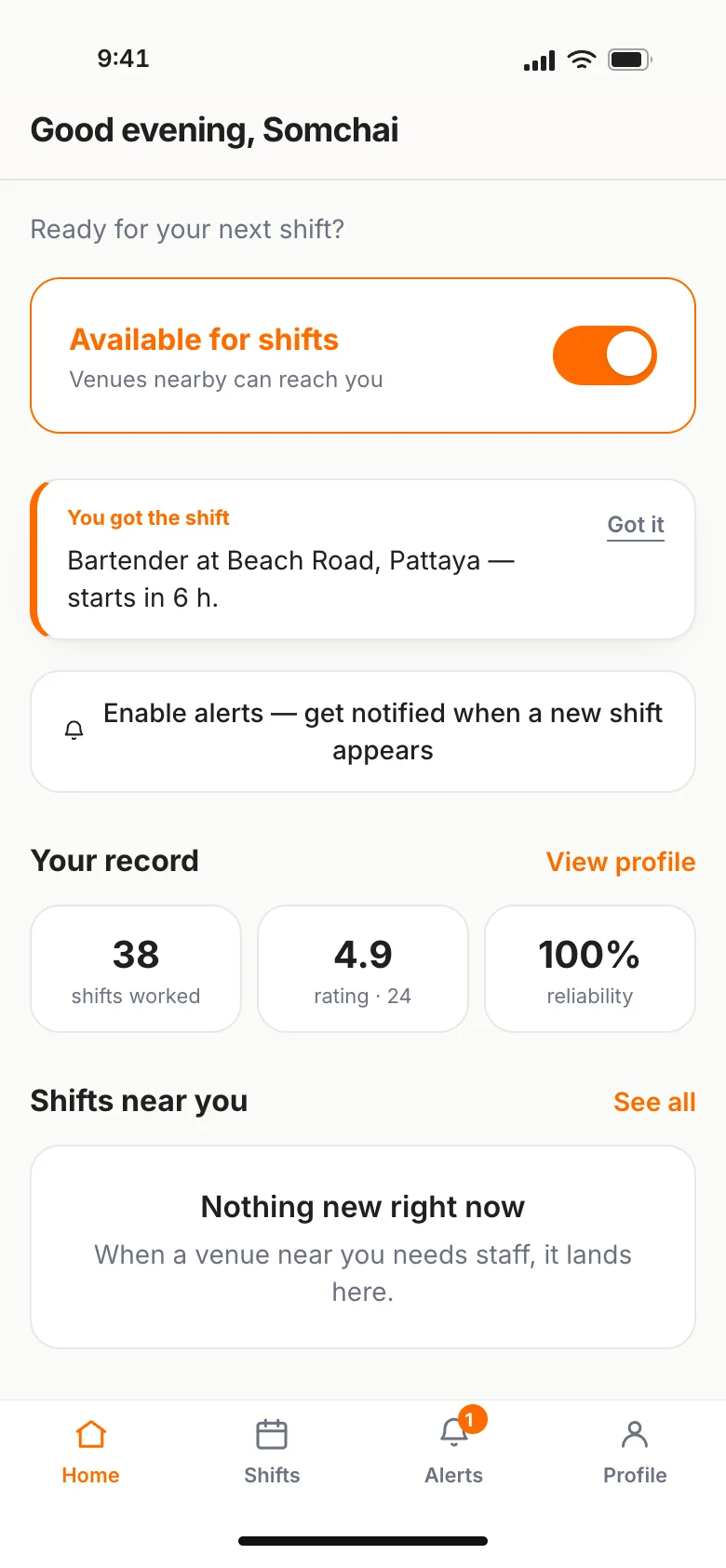
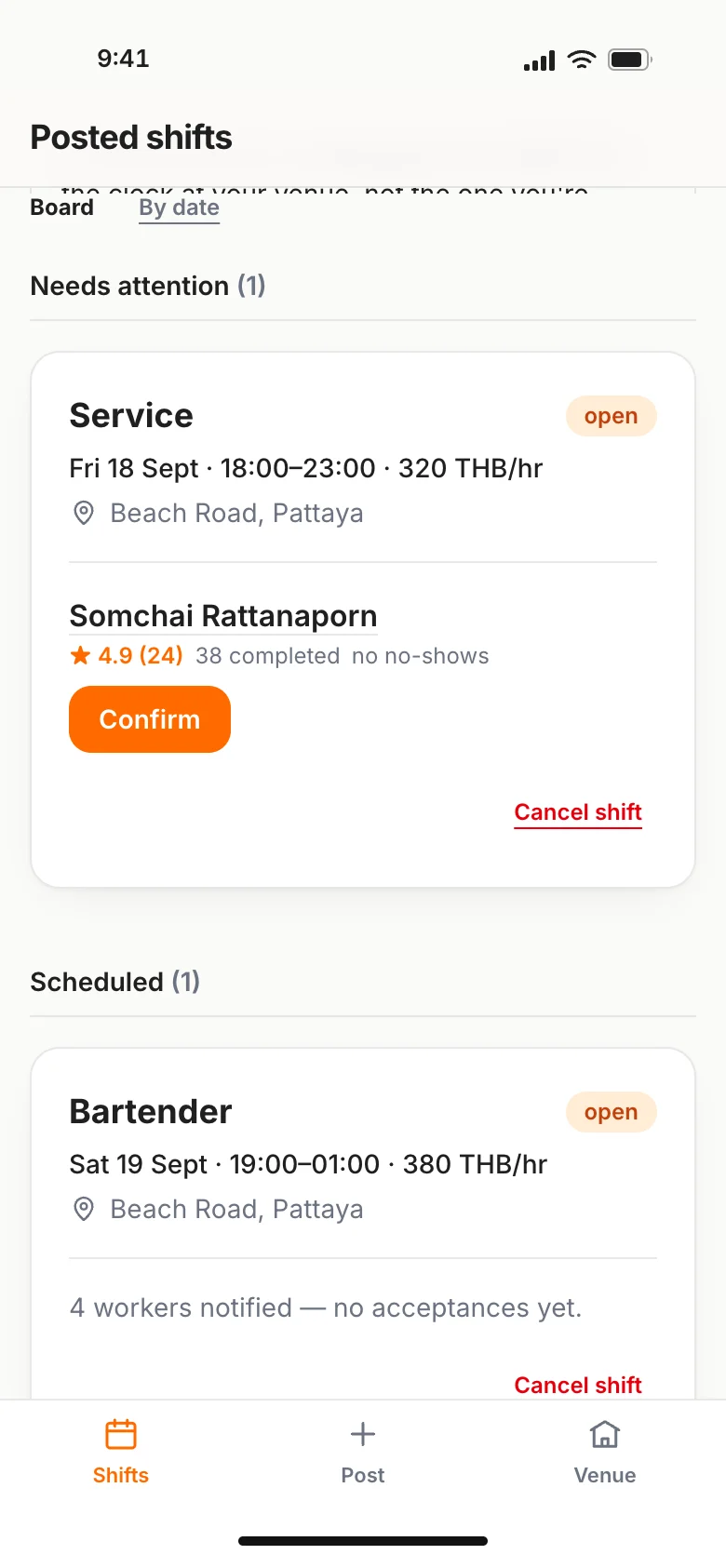
Venues mostly work from a laptop behind the bar, so their side is a web portal built around one question: what needs my attention right now? Workers live on their phone, so theirs is an app that's quiet until a shift nearby needs them.
Posted shifts · Hupp'r Jobs×Post a shift · Hupp'r JobsBookings – Google Sheets+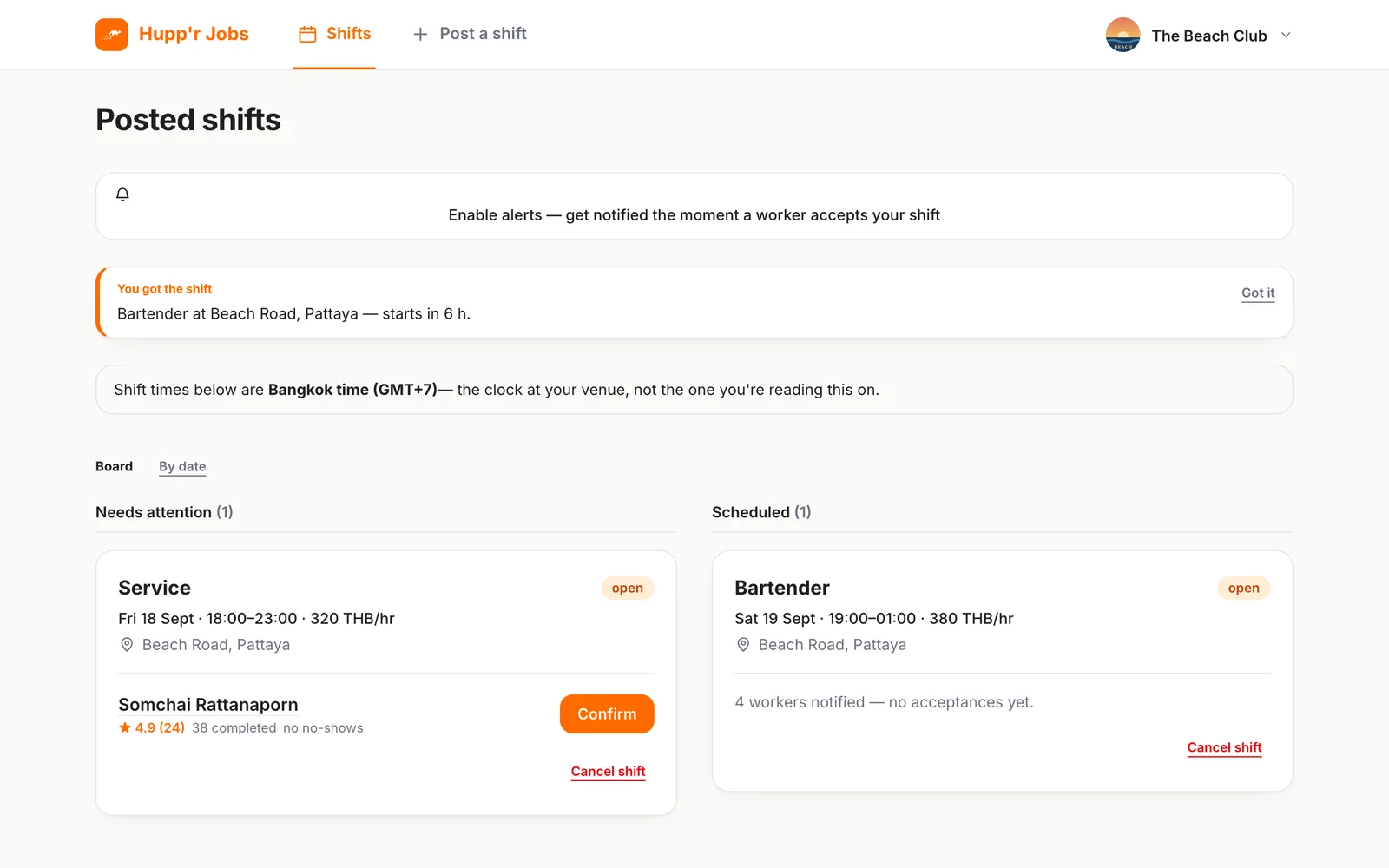
I helped the founder shape the design, then built a working demo of both sides and got it running on my phone and the web. He's now sorting out the logistics before launch.
The biggest thing I learned: building it myself meant every design decision had to survive contact with real data, real time zones and a founder testing from 9,000 km away.